
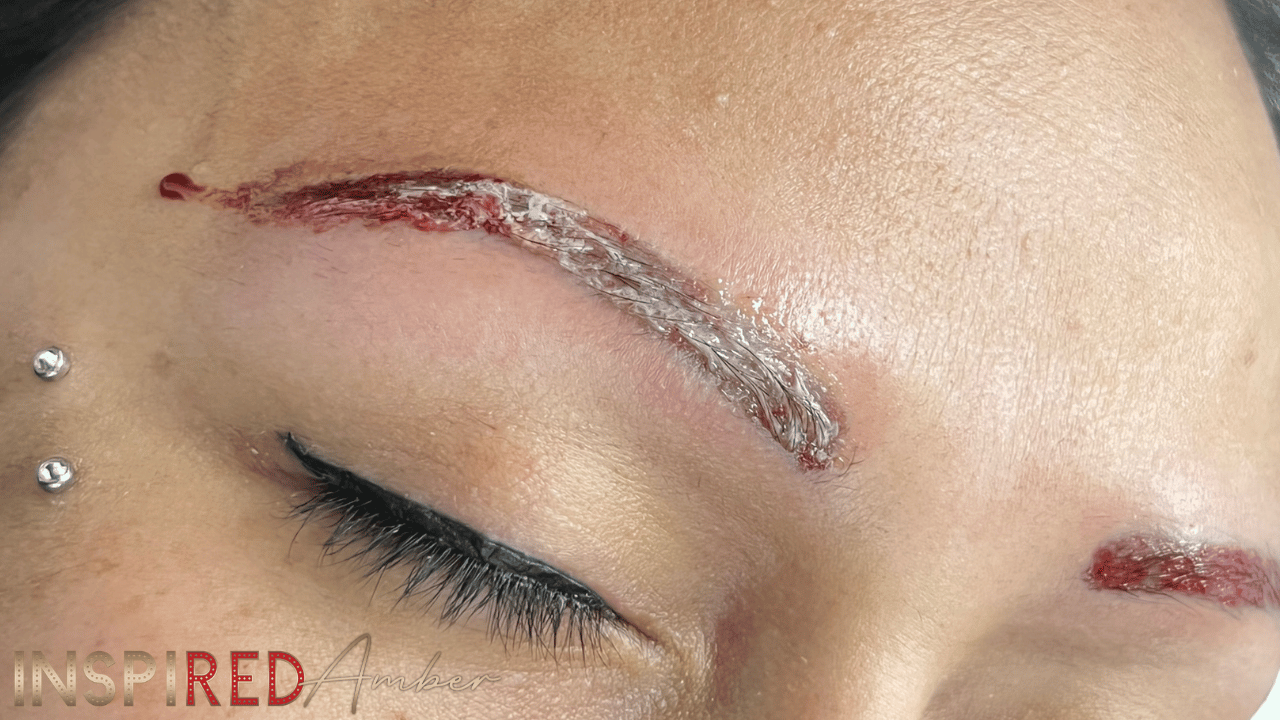
Bad Permanent Makeup? Here’s Why We’re Seeing More
If you work in permanent makeup long enough, you start to see patterns.
And lately, one pattern we’re seeing more and more in the studio is bad permanent makeup that needs to be lightened, corrected, or completely removed.
We’re talking about brows that have turned gray, blue, orange, or pink. Shapes that have migrated or simply don’t fit the client’s face anymore. Microblading that has blurred into one solid mass. Permanent eyeliner that is too thick. Pigment that was implanted too deeply. And clients who are walking through our doors saying, “I just want this OUT.”
But here’s the interesting part:
Not all of these clients had their permanent makeup done recently.
We’re seeing people coming back 10, 15, even 20+ years after their original permanent makeup procedure because they want to refresh it, change the shape, or finally get rid of what’s left.
At the same time, we’re also seeing clients who had their brows done six months ago—and they're already looking for permanent makeup removal because the artist didn't know what they were doing.
Those are two completely different problems.
And I think it’s important that we talk about both.
Permanent Makeup Has Changed A LOT
If you had permanent makeup done 15 or 20 years ago, you cannot compare what was available then to what a properly trained PMU artist can do today.
The industry has changed dramatically.
The machines have changed. Needle configurations have changed. Pigments have changed. Techniques have changed. Our understanding of skin has changed. Color theory has evolved. Artists have access to education and information that simply wasn't available when many of those older procedures were performed.
And honestly? Thank goodness.
Back then, the options were much more limited.
Microblading wasn't even a mainstream technique yet in many areas. Machine techniques were different. Pigments were different. Artists often had fewer options when it came to creating soft, natural-looking results.
And let's not forget that permanent makeup was actually much more permanent than many people realized.
The goal was often, “Put it in and make it last.”
Today, we're thinking differently.
We're thinking about longevity and reversibility.
We're thinking about what that brow is going to look like five years from now—not just how good it looks when the client gets off the table.
That's a massive difference.
Why Are We Seeing So Much Old Permanent Makeup?
There are a few reasons.
The pigment was often implanted too deeply
One of the biggest problems we see with older permanent makeup is depth.
When pigment is implanted too deeply into the skin, it doesn't behave the way we want it to.
Instead of gradually softening and fading, it can remain visible for years and years.
Sometimes decades.
And when the client eventually wants a new shape or a new technique, we're stuck working around that old pigment.
That's when things get complicated.
You can't just slap a new brow over an old brow and hope nobody notices.
Eventually, you run out of room.
Pigments have changed
Pigment technology has also evolved.
Older permanent makeup pigments and tattoo pigments don't necessarily behave the same way modern PMU pigments do.
Some older pigment can remain extremely saturated in the skin. Over time, the color may shift as certain components of the pigment fade or change visually.
That's why we're seeing those classic old brows that have turned gray, blue, reddish, orange, or even strange muddy colors.
And here's something clients need to understand:
A color change doesn't automatically mean the original artist did a terrible job.
There are a lot of factors involved in how permanent makeup ages, including pigment chemistry, implantation depth, skin type, sun exposure, medications, the client's individual skin response, and how the procedure was performed.
But there are also plenty of cases where poor technique absolutely played a role.
The Microblading Boom Created Another Problem
Then came the microblading explosion.
Suddenly everybody wanted hair strokes.
And I get it.
Hair strokes looked amazing when they were fresh.
But here's what a lot of people weren't told:
Hair strokes don't necessarily stay looking like individual hair strokes forever.
Skin is skin.
Those tiny lines can soften and spread over time. On certain skin types—especially oilier skin—they can become even less defined.
And if an artist repeatedly tattoos directly over old strokes, you're adding more pigment and more trauma to the same area.
Eventually, those beautiful little hair strokes can become a much softer, more filled-in brow.
That's not necessarily a bad thing.
But clients need to understand what they're signing up for.
A permanent makeup artist shouldn't just sell the look that photographs beautifully on day one.
We have to think about the five-year result.
And Then There's the Yearly Touch-Up Problem
This is another one that makes me nervous.
Permanent makeup is still a tattoo.
Your skin needs time to heal.
So when I hear about clients getting their brows touched up every six months, every year, and sometimes even more frequently, I immediately start wondering how much pigment is actually sitting in that skin.
More isn't always better.
If there's still plenty of pigment there, adding more pigment doesn't magically make the procedure better.
It can create unnecessary saturation, increase trauma to the skin, and make future corrections and removals much more difficult.
At our studio, we don't want clients coming back just because we've created a business model that depends on constantly adding more pigment.
I would rather see a client every few years when they actually need a refresh.
That's better for their skin—and honestly, I'd rather have a client who trusts us for the long haul than one who's constantly sitting in my chair because their previous artist trained them to believe they need an annual tattoo.
The Other Side of This: Brand-New Bad PMU
Now let's talk about the part that really sucks.
We're not only seeing old permanent makeup coming back because it's finally reached the end of its life.
We're seeing brand-new permanent makeup needing removal.
Sometimes the client had it done only months ago.
And they're already asking:
“How do I get this removed?”
That's a completely different situation.
Why is this happening?
One major reason is that the PMU industry has become incredibly accessible.
That's a good thing in some ways.
More people can build careers. More artists have opportunities. More clients have access to permanent makeup.
But there's a downside.
The industry is becoming oversaturated with artists who aren't properly educated.
And I'm not saying that to trash new artists.
Everybody starts somewhere.
I was new once, too.
The problem is when someone takes a quick course, gets a certificate, buys a machine, opens an Instagram page, and starts permanently tattooing people's faces without truly understanding what they're doing.
That's where things get dangerous.
A Certificate Doesn't Automatically Make You a Good PMU Artist
This is something I wish more people understood.
Taking a permanent makeup course doesn't mean you've mastered permanent makeup.
You need to understand:
-
Skin types
-
Skin conditions
-
Color theory
-
Pigment chemistry
-
Needle configurations
-
Machine settings
-
Depth
-
Saturation
-
Healing
-
Contraindications
-
Facial anatomy
-
Brow design
-
Color correction
-
Removal and lightening
-
Long-term results
-
Proper sanitation
-
Client consultations
-
When NOT to perform a procedure
And that's just scratching the surface.
You should be able to look at a client's existing permanent makeup and understand why it looks the way it does.
Not just, “What color can I put over this?”
That's a huge difference.
Sometimes the Best PMU Decision Is Saying No
One of the most important skills an artist can develop is knowing when not to tattoo.
If the existing pigment is too dark, too saturated, too deep, or the shape is completely wrong, sometimes the answer isn't another brow.
Sometimes it's removal.
Or lightening.
Or waiting.
Or referring the client to somebody who specializes in removal.
And that's okay.
You don't have to be the artist who does everything.
In fact, knowing your limitations is one of the biggest signs that you're actually becoming a better artist.
I've had clients come into the studio with permanent makeup that I could technically work over.
But that doesn't mean I should.
If I know that lightening some of that old pigment first will give us a better long-term result, I'm going to recommend lightening.
It may take longer.
It may cost more.
It may require patience.
But the goal isn't to get the client out of my chair as quickly as possible.
The goal is to give them the best possible result.
Permanent Makeup Removal Isn't an Overnight Fix
This is another misconception I wish would disappear.
If you have permanent makeup that you hate, I know you want it gone yesterday.
I get it.
But permanent makeup removal takes time.
Depending on the pigment, depth, color, technique, skin, and removal method, a client may need multiple sessions.
And between those sessions?
Your skin needs time to heal.
That means you can't keep throwing procedures at the area because you're impatient.
We've had clients who needed several lightening sessions before we could even consider reworking their brows.
I've also had clients who wanted everything completely removed and were looking at a much longer process.
That's the reality.
If you want the best possible outcome, patience matters.
Laser Isn't Always the Answer—And Neither Is Lightening
There's also a lot of arguing online about which removal method is “best.”
Laser.
Lightening.
Saline.
Other removal systems.
Here's my take:
There is a time and place for different approaches.
The right method depends on what you're actually dealing with.
Certain pigments respond differently to different removal methods. Some colors may be more difficult for laser to target. Some situations may be better suited for a lightening procedure.
And sometimes the best answer is a referral.
If I don't believe I'm the right person to remove something completely, I'm going to tell you.
That's not losing a client.
That's being a professional.
Clients: Here's How You Can Protect Yourself
If you're considering permanent makeup, don't just look at someone's Instagram feed.
Fresh brows are easy to make look good.
Healed brows are what matter.
Ask to see healed results.
Ask how long the artist has been working.
Ask what type of pigments they use.
Ask what technique they recommend for your skin.
Ask how often they expect you to need a refresh.
Ask what happens if you don't like the result.
And don't be afraid to ask questions.
You're getting a tattoo on your face.
You should know what you're getting into.
Don't automatically choose the cheapest artist
This isn't me saying you need to spend thousands of dollars.
But if one artist charges $250 and another charges $700, don't automatically assume you're comparing the exact same service.
There may be differences in education, technique, equipment, pigments, experience, consultation, and long-term results.
And if you end up needing removal?
That cheap brow can become a very expensive brow.
PMU Artists: We Have to Do Better
This is where I'm going to get a little blunt.
If you're an artist, keep learning.
Don't stop at your basic certification.
Don't assume that because you can create a beautiful brow today, you understand how that brow will age.
Study skin.
Study color theory.
Study pigments.
Study healed results.
Study removal.
Learn how different techniques affect the skin.
And most importantly, learn when to say no.
Because every bad permanent makeup procedure that needs correction gives our entire industry a little more explaining to do.
We already have clients walking into studios saying things like:
“I heard permanent makeup turns blue.”
“I heard you can never get it removed.”
“I heard you have to get your brows touched up every year.”
“I heard microblading is permanent.”
Some of those statements come from experiences people have actually had.
And that's why our job isn't just to tattoo.
Our job is to educate.
Permanent Makeup Shouldn't Be About Making It Last Forever
This might be the biggest takeaway from all of this.
I don't want your permanent makeup to last forever.
I want it to age well.
I want it to soften.
I want it to give us options.
I want to be able to adjust your shape as your face changes, your style changes, and your preferences change.
Your permanent makeup should have a life cycle.
Fresh → healed → softened → faded → refreshed.
Not:
Fresh → touch-up → touch-up → touch-up → touch-up → “Oh shit, now we have to remove it.”
There's a huge difference.
The PMU Industry Is Better Than It Used to Be—But We Still Have Work to Do
I don't think the answer is to scare people away from permanent makeup.
Quite the opposite.
I think permanent makeup can be an incredible service when it's done correctly.
The techniques available today can create beautiful, natural, long-lasting results without requiring us to permanently lock a client into the exact same brow or eyeliner for the rest of their life.
But that only works when the artist understands what they're doing.
So if you're a client, do your homework.
If you're an artist, keep your education going.
And if you're dealing with old or bad permanent makeup right now, don't panic.
Don't let somebody convince you that you have to immediately tattoo over it.
Get an evaluation. Find out what you're actually dealing with. Give your skin time when it needs it. And understand that correcting permanent makeup is a process—not a magic eraser.
We've spent years watching permanent makeup evolve.
And honestly, some of the old work we're seeing today is a reminder of just how far this industry has come.
But the brand-new bad work we're seeing?
That's our reminder that we still have a long way to go.
And as artists, it's on us to do better.
Want to See What Professional Permanent Makeup Looks Like?
If you're considering permanent makeup in Las Vegas, take the time to look at healed results, understand the different permanent makeup techniques available, and schedule a consultation before committing to a procedure.
SIGN UP TO WATCH OUR FREE GREY BROW COLOR CORRECTION VIDEO & GET 50% OFF YOUR FIRST COURSE PURCHASE!
Become a VIP member, get updates on new events, monthly newsletters, PMU tips and tricks and exclusive offers!
We hate SPAM. We will never sell your information, for any reason. By filling out this form you are agreeing to subscribing to our email list and SMS marketing.


