
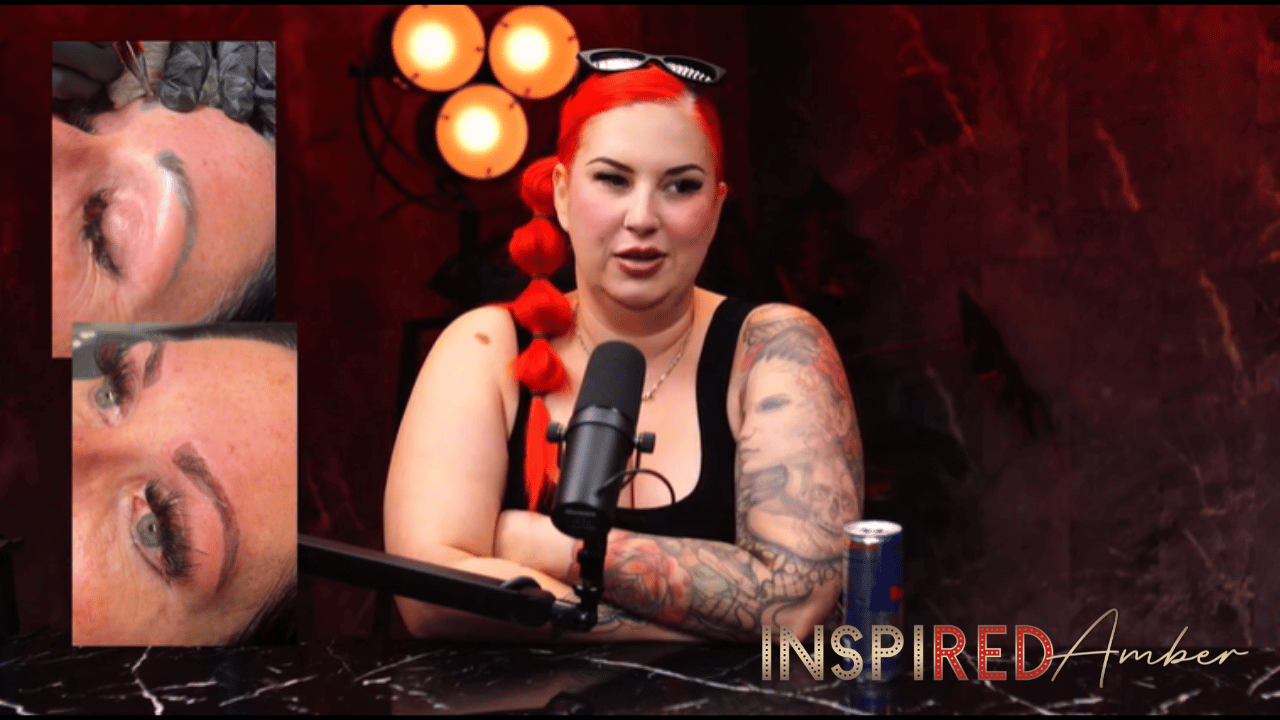
She Touched Up Her Brows Every 3 Months… For a Year (Big Mistake)
If you’ve ever thought about getting your brows touched up more often to keep them looking fresh… this is the episode you need to hear.
In this podcast, we sit down and break down a real client story that a lot of artists and clients can learn from. And I’m telling you right now—this is more common than people think.
We’re talking about a client who had her brows touched up every 3 months for an entire year… and what that actually did to her skin, her pigment, and the long-term outcome.
This isn’t about calling anyone out. This is about education—because mistakes like this are avoidable when you actually understand how permanent makeup works.
Watch/list to the episode here: She Touched Up Her Brows Every 3 Months… For a Year (Big Mistake)
The Backstory: Over-Touching Brows Gone Wrong
Let’s start with the situation.
Tracy originally had her brows done about 10–12 years ago. Back then, microblading was the main technique being offered. There wasn’t nano, there weren’t as many options, and honestly—there wasn’t as much education in the industry either.
So she got microblading.
But here’s where things went sideways.
For the first year after her initial procedure, she was brought back in for a touch-up every 3 months.
Let that sink in.
Why That’s a Problem
Permanent makeup is not meant to be layered that aggressively.
Every time you go back in and add more pigment, you are:
-
Adding more saturation
-
Increasing trauma to the skin
-
Potentially creating scar tissue
-
Blurring out previous work
So instead of building something better, you’re overloading the skin.
And that’s exactly what happened here.
What Happens When You Overwork the Skin
By the time Tracy came back into my studio, her brows had:
-
Turned gray/blue
-
Lost all visible hair strokes
-
Become overly saturated
-
Developed some scar tissue
And this is something I see all the time in permanent makeup correction.
The Myth: “More Touch-Ups = Better Results”
No.
More touch-ups—especially too soon—lead to:
-
Muddy, ashy brows
-
Thick, blown-out strokes
-
Poor pigment retention over time
-
Difficult (and long) removal process
Permanent makeup is not like getting your nails filled every few weeks.
The skin needs time to heal. And more importantly—it needs time to rest.
Why Microblading Wasn’t the Right Choice
Another big factor in this situation was skin type.
Tracy has oily skin.
And if you’re an artist reading this, you already know where I’m going with this.
Microblading + Oily Skin = Blurred Results
Microblading creates manual cuts in the skin to mimic hair strokes.
But with oily skin:
-
The strokes spread
-
They blur together
-
They lose definition quickly
So what started as “hair strokes” eventually healed into something that looked more like a solid, powdery brow—but not in a good way.
For Clients: This Is Why Consultations Matter
Not every technique is right for every person.
If your artist isn’t:
-
Asking about your skin type
-
Explaining different options
-
Recommending what’s best for YOU
That’s a red flag.
The Removal Process: Why It Takes Time
At this point, Tracy didn’t just need a touch-up—she needed correction.
So we started the process of lightening (removal) using a method designed to lift pigment out of the skin.
Here’s What Most People Get Wrong About Removal
A lot of artists think:
“If the pigment is deep, I need to go deeper to remove it.”
That’s not how it works.
The goal is not to chase the pigment deeper into the skin.
The goal is to:
-
Open the skin properly
-
Create blood flow
-
Allow the solution to bind to the pigment
-
Lift it up and out during healing
Going too deep = more trauma, more damage, more problems.
Why Removal Is a Process (Not a One-Time Fix)
This is where patience comes in.
In the podcast, we talk about cases where removal can take:
-
4 sessions
-
8 sessions
-
Sometimes more
And each session requires:
-
Full healing time (around 6–8 weeks)
-
Proper aftercare
-
Realistic expectations
So if a client comes in expecting instant results… that’s not how this works.
The Biggest Aftercare Mistake We See
This part is huge.
During the episode, Tracy mentioned that someone told her to remove her scabs early.
That is one of the worst things you can do during the healing process.
Why Scabs Matter in PMU Removal
With lightening/removal:
-
The scabs are actually pulling pigment out of the skin
-
They need to stay intact as long as possible
-
Removing them early interrupts the entire process
If you pick them off:
-
You lose results
-
You increase the chance of scarring
-
You’ll need more sessions
For Artists: You Need to Educate Better
Clients are getting bad advice everywhere—social media, friends, even other artists.
It’s your job to:
-
Set clear expectations
-
Explain the “why” behind aftercare
-
Make sure they understand the consequences
Why We Didn’t Fully Remove the Brows
This is where strategy comes in.
A lot of people think:
“Let’s just remove everything and start over.”
But that’s not always necessary—or smart.
The Goal: Lighten Enough to Rework
In Tracy’s case, the goal is to:
-
Lift enough pigment
-
Improve the base
-
Then go back in and create a better shape and color
Because here’s the reality:
You don’t always need full removal—you need a better foundation.
Full removal can take forever, and most clients don’t have the patience for it.
Color Correction vs Removal
We also touched on something important in the episode:
Could we have just color corrected instead of removing?
Technically—yes.
But here’s the problem with that approach:
If you keep layering new pigment over:
-
Old, cool-toned (gray/blue) pigment
-
High saturation
You’re setting yourself up for:
-
Future color issues
-
More buildup
-
Eventual removal anyway
So sometimes it’s smarter to:
Take some out before you put more in.
The Reality of PMU: It’s Not One-Size-Fits-All
One of the biggest takeaways from this episode is that permanent makeup is not predictable.
What works on one client may not work on another.
We talked about:
-
Color corrections that worked… and others that didn’t
-
Removal cases that were easy… and others that took months
-
Techniques that depend heavily on skin type, history, and saturation
For Artists: Stay in Your Lane (But Keep Learning)
You don’t have to take on every case.
In fact, you shouldn’t.
Know:
-
What you’re confident in
-
What you’re experienced with
-
When to refer out (laser, advanced removal, etc.)
That’s how you protect your work—and your reputation.
The Bigger Lesson: Don’t Be Cheap, Don’t Rush It
At the end of the episode, we said it straight:
Don’t be cheap.
Because when you go to the wrong artist or rush the process, you end up:
-
Paying more in corrections
-
Spending months (or years) fixing it
-
Dealing with results you don’t love
For Clients:
Go to someone experienced. Ask questions. Look at healed results.
For Artists:
Charge your worth—and do it right the first time.
Final Thoughts: Do It Right or Fix It Later
This episode is a perfect example of what happens when:
-
The wrong technique is used
-
The skin type isn’t considered
-
The brows are overworked
-
And the client isn’t properly educated
But it’s also a reminder that most of this is fixable.
It just takes:
-
Time
-
Patience
-
The right approach
If you’re an artist, take this as a lesson.
If you’re a client, take this as a warning.
Because permanent makeup isn’t just about how it looks today—it’s about how it heals, ages, and holds up over time.
And trust me…
Fixing it later is always harder than doing it right the first time.
SIGN UP TO WATCH OUR FREE GREY BROW COLOR CORRECTION VIDEO & GET 50% OFF YOUR FIRST COURSE PURCHASE!
Become a VIP member, get updates on new events, monthly newsletters, PMU tips and tricks and exclusive offers!
We hate SPAM. We will never sell your information, for any reason. By filling out this form you are agreeing to subscribing to our email list and SMS marketing.


